Sitting in la Plaza de Dorrega, the main square in San Telmo on our first night in Buenos Aires it was difficult to tell if we were drunk from the excitement of finally arriving after months of talking about it or on the Malbec wine that accompanied our dinner.
We had chosen Buenos Aires as the first destination in our trip in South America because we wanted to be in a city where we could learn Spanish and we had heard that BU AS was the Paris of South America. Not much more thought than that and now we were finally here. I felt the same way as I had the first night I spent in Paris 30 years ago sitting next to La Seine plotting how I could live in the city.
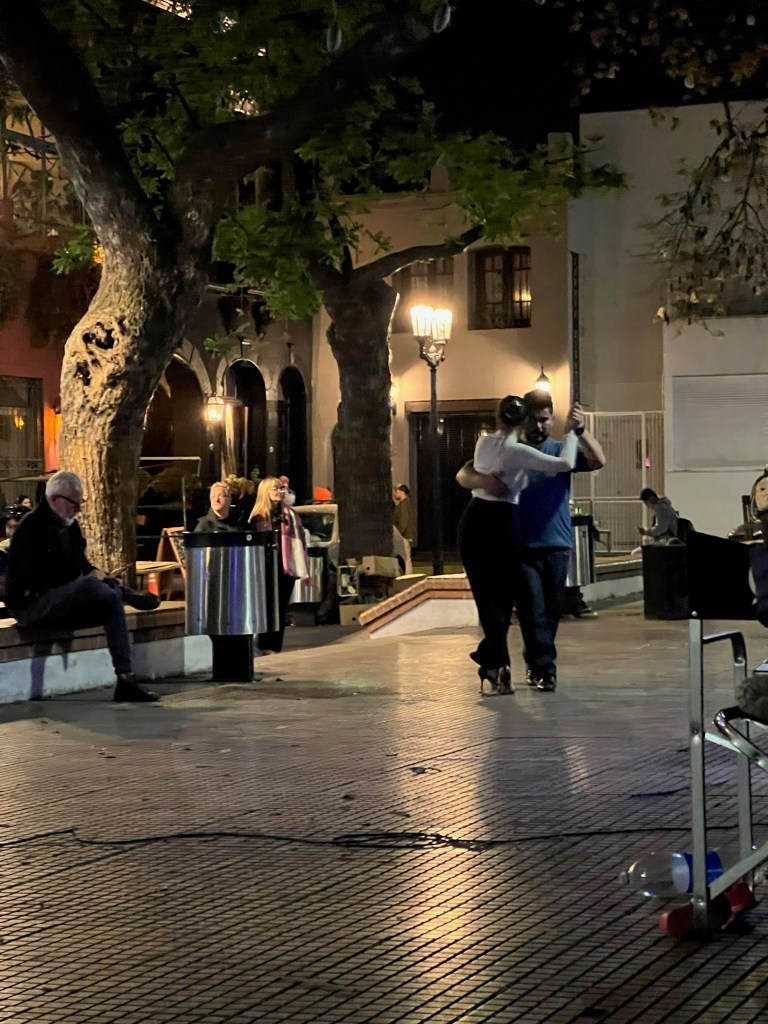
The restaurant was quiet, of course, it was only 8 pm and nobody goes out for dinner before 9pm here. The night was warm, the music of tango and pop merged into one sound. Sylvie and I talked and people watched: A young woman – short skirt and heels look, on the phone trying to locate her date. German, American, English tourists passed us looking for dinner as an elderly lady with her even older dog slowly crossed the square both of them oblivious to everything going on.
San Telmo, where we are living, is one of the oldest ‘barrios’ of Buenos Aires and had been prosperous until 1871 when an outbreak of yellow fever lead to the wealthy moving north in the city. They were replaced by immigrants and bohemians.
These days it is also a tourist area. A street market on Sundays snakes around the streets, stallholders sell leather bags, bracelets, antiques and really nothing much of interest. There are also the inevitable tourist shops selling everything from key rings to backpacks (as long as it says Buenos Aires somewhere); cheap and expensive restaurants, serving portions of meat too big to be consumed in one siting by anything other than a starved hyena.
The beauty of San Telmo is a subtle one, it hides between the shops and market stands. I like to walk round, alone in the quiet parts of the day, the mid-afternoon when others are working or sleeping off lunch. Looking up at an ornate balcony in Calle Bolivar my gaze is stolen by the flash of cherry red from the royal poinciana plants clinging to a building a few blocks down. These plants have integrated the buildings, growing out of cracks in the wall, pouring over balconies so bright and yet subtle to blend and contrast with the buildings simultaneously. They remind me of Rosellas darting out of green undergrowth in the Australian countryside.
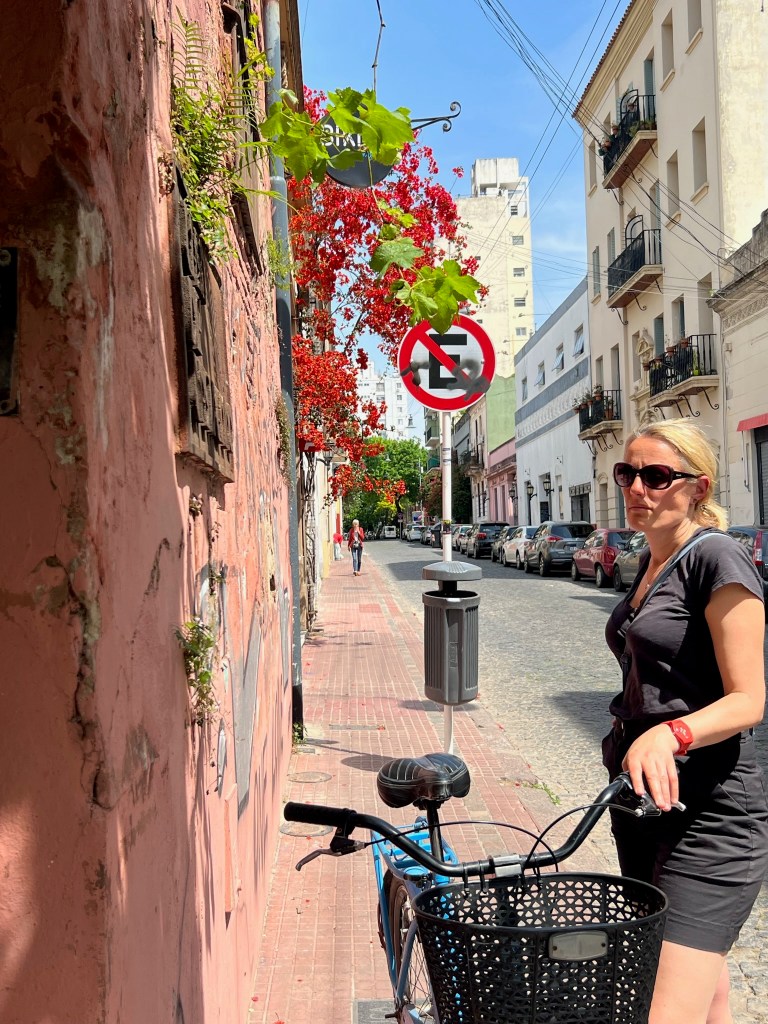
As I pay closer attention I notice plants are everywhere. Small english mustard colour flowers growing out of holes in a wall or potted oranges ones perched on window sills waving in the breeze. Some of the buildings abandoned by people have plants growing out of window frames and through the roofs. Despite the sounds of banging and drilling from the workman in Calle Bolivar or the grumbling roar of the buses tearing down Calle Peru we are reminded that nature will continue regardless of human presence.
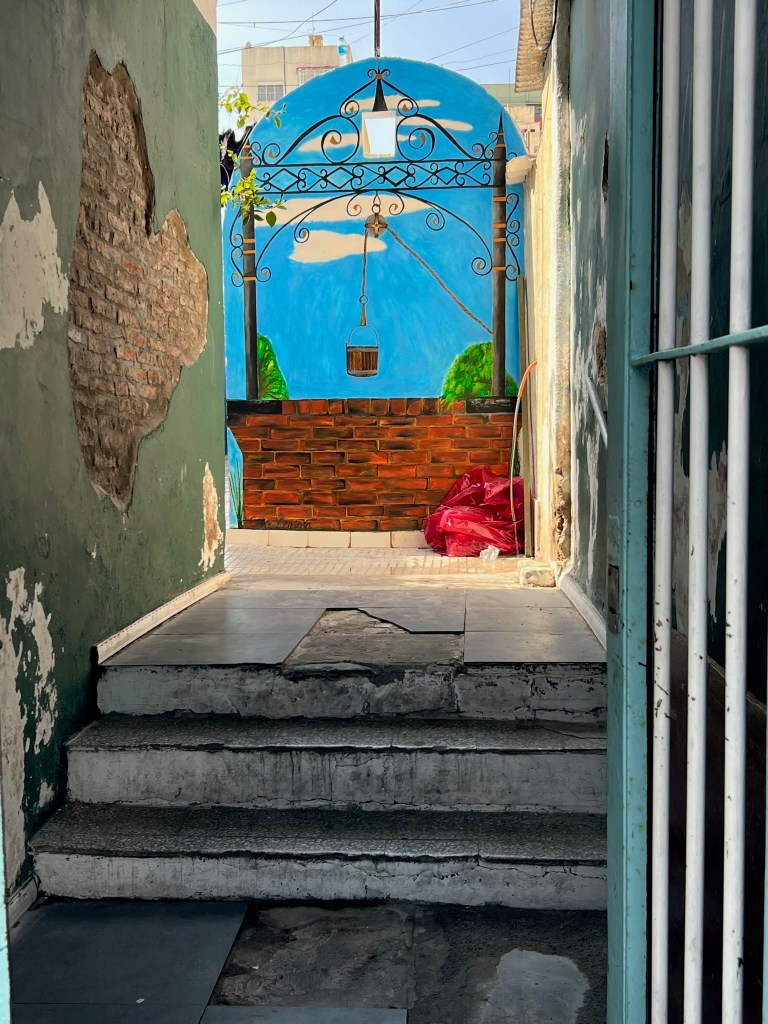
Further down the street, a door to a courtyard is open and I spy inside, a corridor decorated by small statues and at the end, a mural of a garden well.
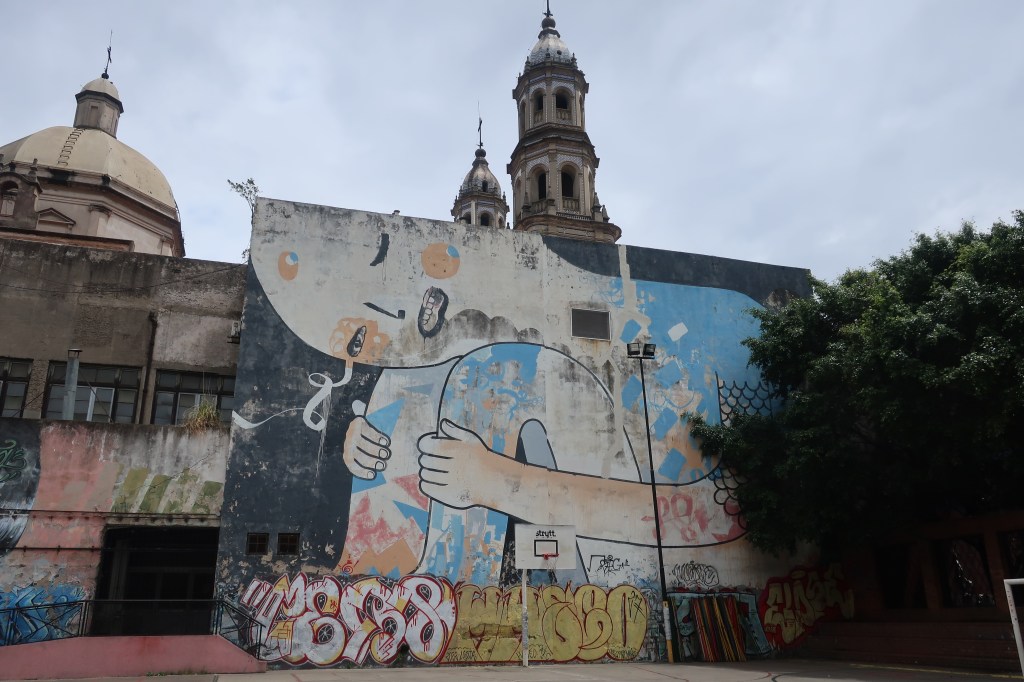
Street art is everywhere in Buenos Aires. It emerged here in the 1990s when a generation of Argentinians enjoyed the freedom of both a democracy after decades of dictatorships and a strong Pesos. They saw street art in New York, LA and Berlin and bought it back to BA. The big difference being that, unlike other places, street art and graffiti was never treated as a criminal act here.
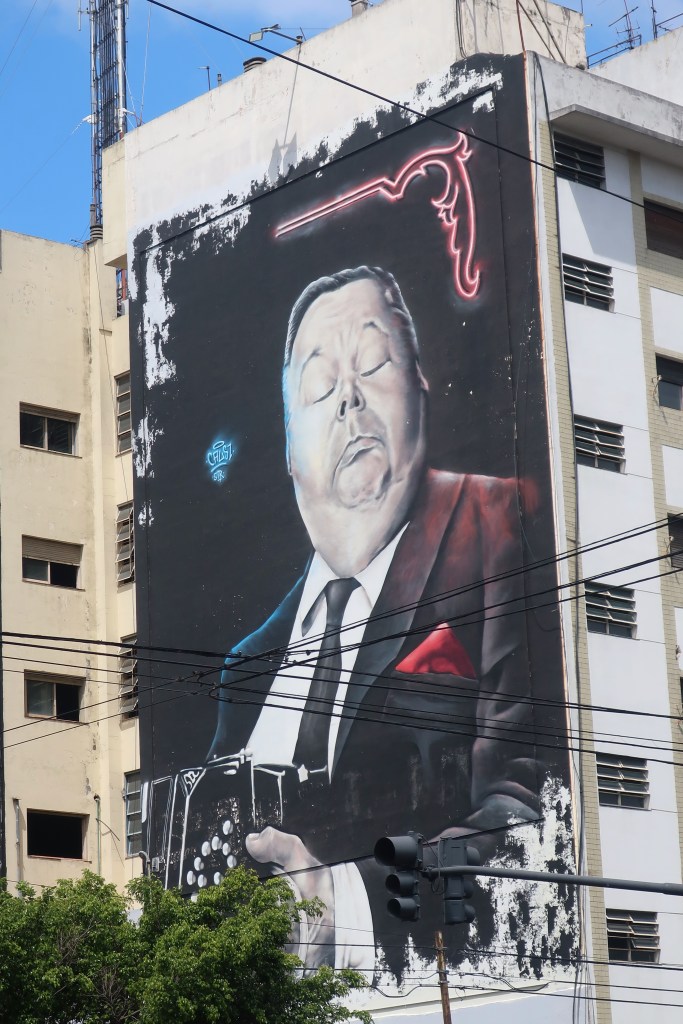
The artworks are often massive, taking up entire walls of apartment blocks. They are often political – the image of a sad child, neck craning forward on a wall directly behind the tower of a church, or the images of the mothers (las Madres- a group of women who attracted the attention of the world to the plight of their missing children by walking silently around Plaza Mayo in the 1980s) with a strong clenched fist raised against the sun of the Argentinian flag. They are always colourful. It represents a history of anarchy and freedom of expression as well as popularism where art is to be shared by everyone not just the wealthy.
In this city life happens outdoors on the streets; kids playing soccer on Calle Peru; the lady who sells newspapers and magazines from a kiosk on avenue San Juan holding court as all her friends sit in deck chairs listening to her in the late afternoon; The men passing from table to table in the outside tables of cafes selling socks, lighters, pens etc with politeness and sincerity.
A few nights ago, too tired to eat at home, we walked down Calle Bolivar and found a table outside. This part of the street is closed to traffic at the moment due to road improvement works. Sylvie and I shared a Roquefort pizza and salad and talked about everything and nothing and for once I was actually mindful enough to realise how lucky I am to be with Sylvie, sharing these simple and beautiful experiences.
 Ben and Sylvie in South America